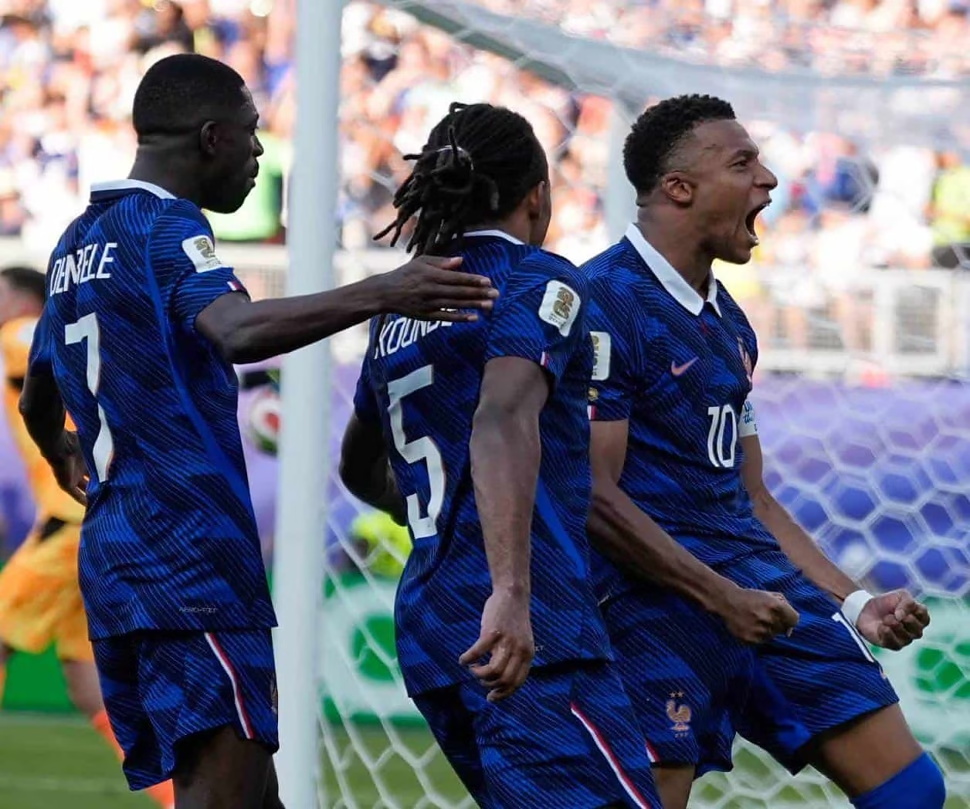
France is the betting favorite to win the 2023 World Cup

France leads the bets with odds +187. Spain, Argentina and England follow.

Favorites for the title

With the quarterfinals at hand, only seven games separate the teams from the championship. The betting houses already have clear predictions.

France tops the list with an odds of +187. For every 500 pesos bet, the winner would receive 1,437 pesos if the Gauls lift the trophy on July 19. Trust falls on Kylian Mbappé, who has seven goals in five games. But first they will have to overcome Morocco.

RelatedUNAM warns: sports betting grows with the 2026 World Cup

Spain appears in second place, with a quota of +350. A bet of 500 pesos would generate 2,250 pesos in profit. France and Spain could meet in the semifinals if they both beat their rivals.

Betting and odds

Argentina and England occupy third and fourth place, respectively. The Albiceleste has odds of +400: 500 pesos bet would give 2,500 pesos if Lionel Messi wins the two-time championship. For England, the same amount would bring in 2,750 pesos.

The figure of Mbappé has been decisive in raising expectations about France. The betting houses reflect that confidence by positioning the Gauls as the main contenders.
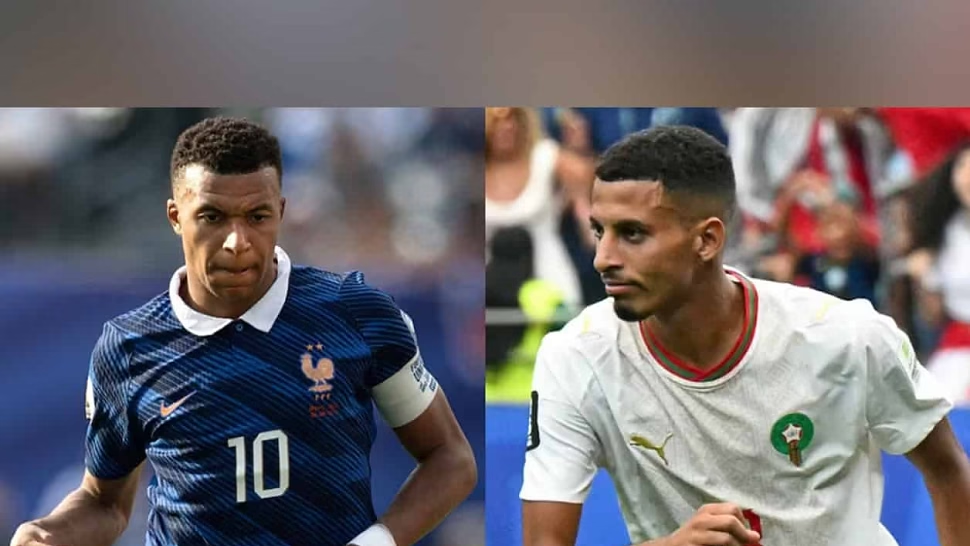
France vs Morocco: schedule and channels for the 2026 World Cup quarterfinals

Quarterfinals of the 2026 World Cup start with France vs. Morocco. Schedule and channels.

Quarterfinals of the 2026 World Cup

This Thursday, July 9, the Quarterfinals of the World Cup begin. The first duel will pit France against Morocco at Boston Stadium.

The match is scheduled for 2:00 p.m., central Mexico time. The broadcast will be available on open television through Channel 5, Azteca 7 and the TUDN signal. It can also be followed through the ViX World Cup pass.

Both teams reach this stage after passing the group stage and the round of 16. France, world champion in 2018, seeks to repeat the feat. Morocco, for its part, is trying to make history by advancing to the semifinals for the first time.

The match promises to be intense, with contrasting playing styles. Mexican fans will be able to enjoy it live from open screens or the streaming platform.

Continue reading

Sheinbaum defends success of voluntary disarmament

President highlights results of the weapons delivery program with ecclesiastical support.

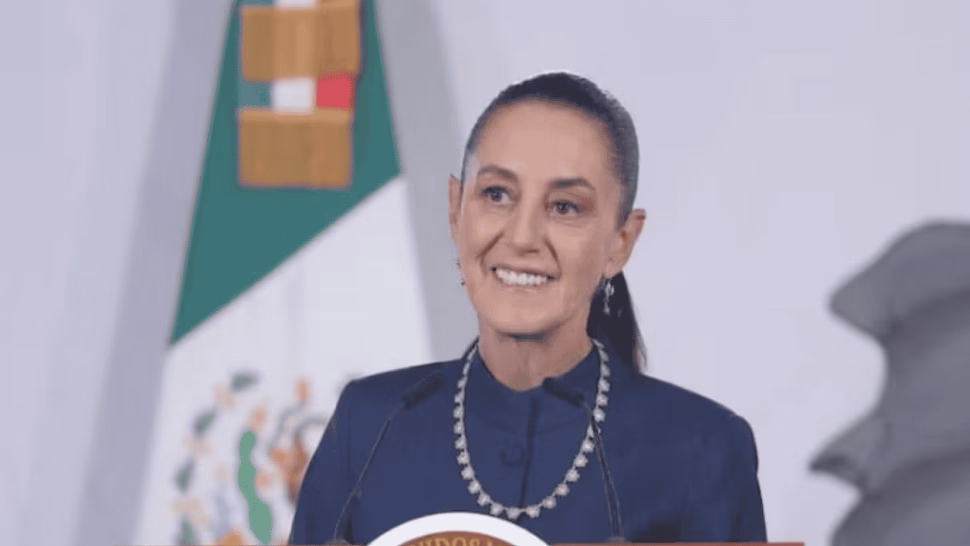
President Claudia Sheinbaum defended this Thursday the “Yes to Disarmament, Yes to Peace” program as a successful initiative to remove firearms from Mexican homes. Each weapon surrendered, he said, represents a possible life saved.

“It has been very successful and also everything we do to disarm peacefully is saving a life. It is removing an instrument that can cause death. It is pacifying,” he said in his morning conference from the National Palace.

The program allows the anonymous delivery of weapons without investigation and provides financial support in exchange. According to the president, collaboration with the Catholic Church has been key. This Thursday he will lead a day in the atrium of the Basilica of Guadalupe, where the program began last year.

Voluntary disarmament and results

Voluntary disarmament is part of the government’s pacification policy, which seeks to reduce violence without direct confrontation. Sheinbaum highlighted that the trust generated by religious spaces facilitates citizen participation.

To commemorate the International Day of the Destruction of Firearms, the Secretariat of National Defense will soon present a balance of the weapons secured and destroyed. The president announced that this report will include data on the number of weapons removed from circulation since the launch of the program.

Continue reading

Eduardo Feinmann apologizes for comments against Mexico

After comments against Mexicans, the Argentine journalist offered a public apology on his program.

The Argentine journalist Eduardo Feinmann generated a strong controversy on social networks after his statements considered offensive towards the Mexican people went viral. In his radio program, Feinmann said: “I hate Mexicans, the envy that Mexicans have of Argentines, they want to be like us.” The phrases unleashed widespread rejection in both Mexico and Argentina, including the Argentine community living in Mexican territory.

The football rivalry between both countries has escalated in recent years beyond sports. Public figures like Feinmann, instead of promoting unity, often fuel confrontation with comments that cross the line of discrimination.

Apologies on air

Faced with public pressure, Feinmann recanted live during her show. “I made a comment that angered millions of Mexicans and they are right to be angry with me,” he said. And he added: “It was not a xenophobic comment, nor a message of hate, we were talking about football.”

The communicator also noted: “If any Mexican felt that my words were reaching them personally, I want to tell them that that was not the meaning of what I said.” In his attempt to calm the controversy, he stated that he does not feel contempt for the Mexican people and that he spoke from sporting passion.

The apologies failed to completely dissipate the unrest on social networks. Several users pointed out that xenophobia disguised as “football passion” should not be normalized, while others considered Feinmann’s gesture sufficient. The debate about the limits of sports rivalry remains open.

Continue reading