Analysis of the 25 Project for 25: An Unprecedented Publishing Initiative
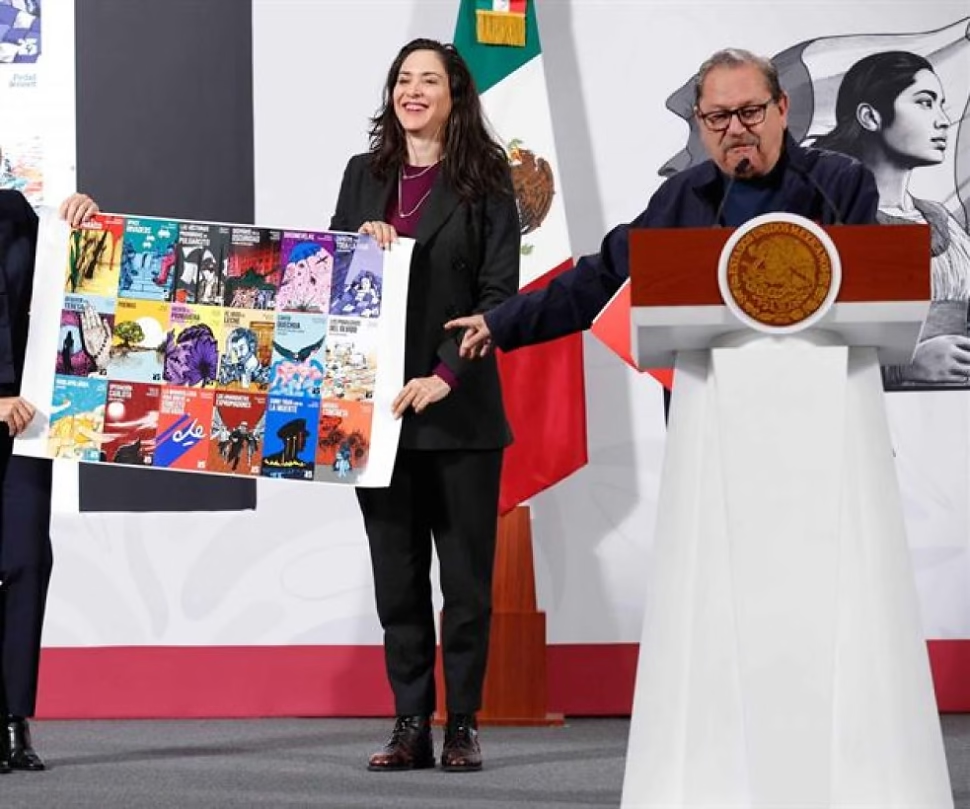
The Economic Culture Fund (FCE), under the direction of the writer and researcher Paco Ignacio Taibo II, has launched the project called “25 for 25”, an initiative to promote reading on a continental scale. The central objective of this program is the free distribution of 2.5 million copies among the young population of Latin America, aged between 15 and 30 years. According to what Taibo II stated during a press conference at Palacio Nacional, this collaborative effort represents the most extensive literary promotion operation at a global level, standing out for its ambition and demographic reach.
The development of this plan required a two-year process of meticulous planning and construction of strategic alliances with various nations. A crucial financial aspect was the support obtained from the Institute to Return Stolen Things to the People, which made mass production viable. It should be noted that the strategy deliberately prioritizes the physical book over the digital format, seeking to generate a tactile and possession experience that, according to the project’s perspective, more effectively encourages the reading habit. Taibo II advanced the possibility of including two additional titles, which would raise the final figure to 27 distributed volumes, and emphasized that the selection is aimed at a youth and young adult audience, not children.
Logistics and Geographic Scope of Distribution
The logistics architecture of the project is a fundamental component of its viability. Countries such as Colombia, Cuba and Venezuela have contributed significantly in the editorial production and manufacturing phases. Likewise, nations such as Uruguay and Honduras have joined the distribution network, which includes all FCE bookstores. A key institutional actor has been the Secretary of Foreign Affairs (SRE) of Mexico, whose intelligent participation will facilitate the sending of the books to Mexican communities through the consular network in the United States, thus expanding the transnational impact of the initiative.
However, the road has not been without obstacles. Taibo II described the process of acquiring copyright as a “hilarious via crucis,” facing refusals from author families and publishing houses, whether for economic or other reasons. A significant setback was the breaking of the initial pact with Argentina after the change of government and the arrival of Javier Milei to the presidency, which demonstrates the vulnerability of these projects to political fluctuations.
Literary Canon and Critical Perspective of the Collection
The curation of the collection seeks to offer a representative panorama of Latin American literature, including a constellation of fundamental voices. The list of authors confirms an attempt to balance canonical figures with other less popular ones. Among the confirmed names are Gabriel García Márquez, Elena Poniatowska, Eduardo Galeano, Mario Benedetti, Juan Carlos Onetti, Miguel Ángel Asturias, Roque Dalton, Dulce María Arguedas, Blanca Varela, Amparo Dávila and Sergio Ramírez, among others.
When analyzing the composition of the collection, Taibo II made a critical observation about the literary boom, pointing out its “mostly male” character, while recognizing the inclusion of female authors. Each bibliographic incorporation represented “a different battle”, where prestige factors were decisive for the transfer of rights, while rejections were predominantly linked to economic problems. President Claudia Sheinbaum Pardo highlighted the importance of this literary recovery of certain periods and themes, underlining its value for contemporary knowledge and reflection.
The symbolic launch event is scheduled for December 17, with the simultaneous opening of boxes in approximately 200 locations in Latin America, including the Zócalo in Mexico City, creating a powerful visual spectacle around the democratization of access to print culture. Finally, Taibo II called on publishers to donate titles that are usually destroyed for tax reasons, proposing the creation of a reception and filter criterion for their useful redistribution, a reflection that invites us to rethink the life cycles of the editorial product.
Do you think initiatives like this can transform reading habits in the region? Share this news on your social networks to publicize this monumental cultural effort and explore more content on literature and education.