Explosion in Trujillo reflects security crisis in Peru

A violent act shakes the tranquility of a Peruvian city, leaving material damage and injuries.

A Call to Resilience in the Midst of Adversity

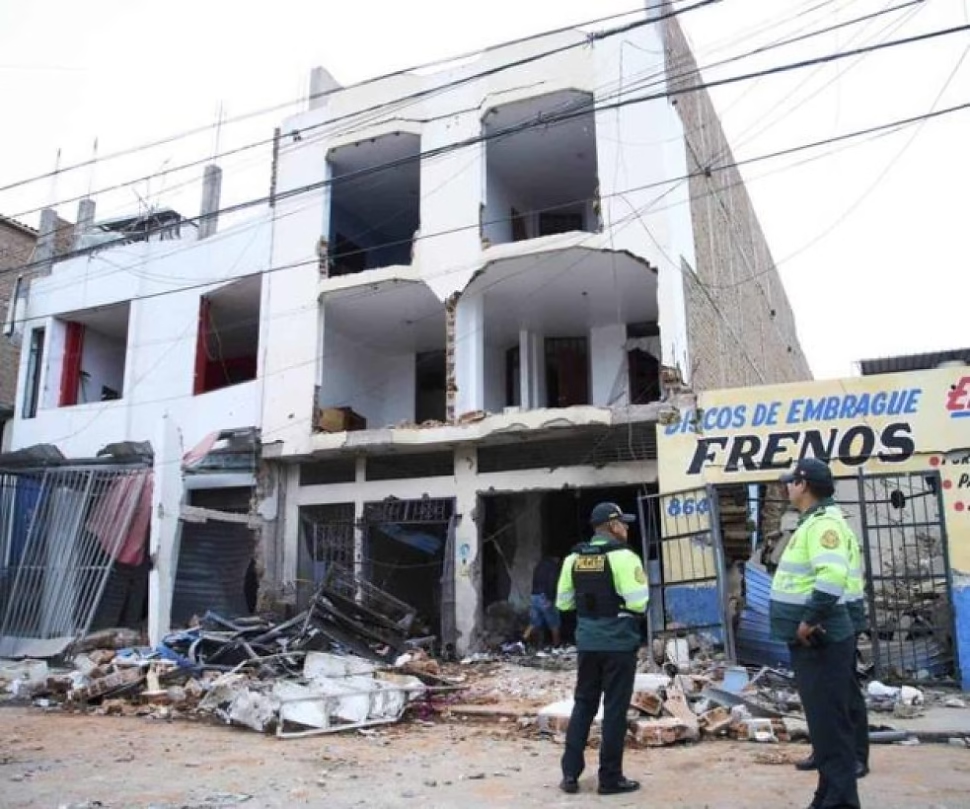
In times where darkness seems to gain ground, the light of the community shines brighter than ever. The recent explosion in Trujillo, Peru, reminds us that even in the most difficult circumstances, there is opportunity to come together and rebuild. Yes, there were injuries, yes, there is material damage, but there are also stories of bravery and neighbors who support each other. That is true strength!

Transform Fear into Action

The streets of Trujillo, a region that has faced the scourge of organized crime, today cry out for solutions. But it is not enough to point out the problem: it is time to act. Every broken glass, every knocked down wall, is a reminder that safety is a right that we must protect together. As? Demanding transparency, supporting committed authorities and, above all, being vigilant of our own community.

RelatedSouth American bloc orders Peru to stop illegal mining and mercury trafficking

The Minister of the Interior mentioned that this act could be linked to conflicts between gangs, but beyond the hypotheses, one thing is clear: extortion and violence cannot be normal. With 15,989 extortion complaints so far this year, the numbers speak for themselves. But you and I know that numbers don’t define the future: actions do.

While authorities investigate, we can choose not to give in to fear. Imagine a Peru where every business, every public transport, every home is a safe space. That future starts today! Small gestures—such as reporting suspicious activities or strengthening neighborhood networks—are giant steps toward peace.

Hope as an Engine of Change

The region of La Libertad, governed by César Acuña, has been dealing with crime for decades. But here’s the key: freedom is not just a name, it’s a promise. And to fulfill it, we need leaders who listen, effective policies and, above all, citizens who believe in change. President Dina Boluarte and her team have the opportunity to turn this tragedy into a turning point.

While we wait for official statements, let us remember that hope is not passive. It is time to demand more patrols, better anonymous reporting systems and social programs that keep young people away from crime. Because when a community comes together, the impossible becomes reality.

And you know what else? This explosion does not define Trujillo. What really defines this city are the families that rise up, the doctors who care for the injured, the volunteers who help rebuild. That is the spirit that will win!

Join the Transformation

Today I invite you to be part of the solution. Share this story to make visible the urgency of a safer Peru. Explore more content about community initiatives and how you can join. Together, we can turn pain into purpose and challenges into victories. The change starts with you!

#United Peru #SecurityIsPriority

Trump confesó que llamó “loco” a Netanyahu en tensa llamada

Trump admitió que llamó "loco" a Netanyahu y expresó preocupación por la escalada en Líbano.

Trump y Netanyahu: tensión en privado

El presidente Donald Trump reveló que durante una llamada telefónica el lunes llamó “loco” al primer ministro israelí Benjamin Netanyahu. Lo hizo en una entrevista con el pódcast “Pod Force One” del New York Post, publicada el miércoles. El mandatario estadounidense dijo sentirse “un poco perturbado” por la escalada del conflicto entre Israel y Hezbolá en Líbano.

“Hemos trabajado muy bien juntos. Me gusta mucho Bibi. Y trabajo muy bien con él”, declaró Trump, usando el apodo de Netanyahu.

A pesar del comentario, insistió en que la relación sigue siendo sólida. Evitó fijar un cronograma para el fin de las hostilidades. Señaló que el estrecho de Ormuz podría permanecer cerrado hasta el 7 de septiembre, aunque lo consideró poco probable y confió en una resolución rápida.

RelatedIsrael’s growing international isolation before the UN

Sobre Irán, Trump afirmó que el líder supremo Mojtaba Jamenei está involucrado en las conversaciones de paz. Dijo que el dirigente iraní enfrenta problemas de salud tras un ataque aéreo, pero que “dicen que está dando aprobación” a los esfuerzos diplomáticos.

Combates continúan en Líbano

Mientras tanto, los enfrentamientos entre Israel y Hezbolá prosiguen en territorio libanés con nuevos ataques aéreos. Las negociaciones mediadas por Estados Unidos buscan contener la escalada, pero las diferencias —como la exigencia israelí de desarmar a Hezbolá— mantienen incierto el camino hacia un alto el fuego duradero.

Continue reading

Drones ucranianos incendian terminal petrolera en San Petersburgo

Ataque ucraniano con drones de largo alcance incendia terminal petrolera en San Petersburgo.

Ataque de largo alcance

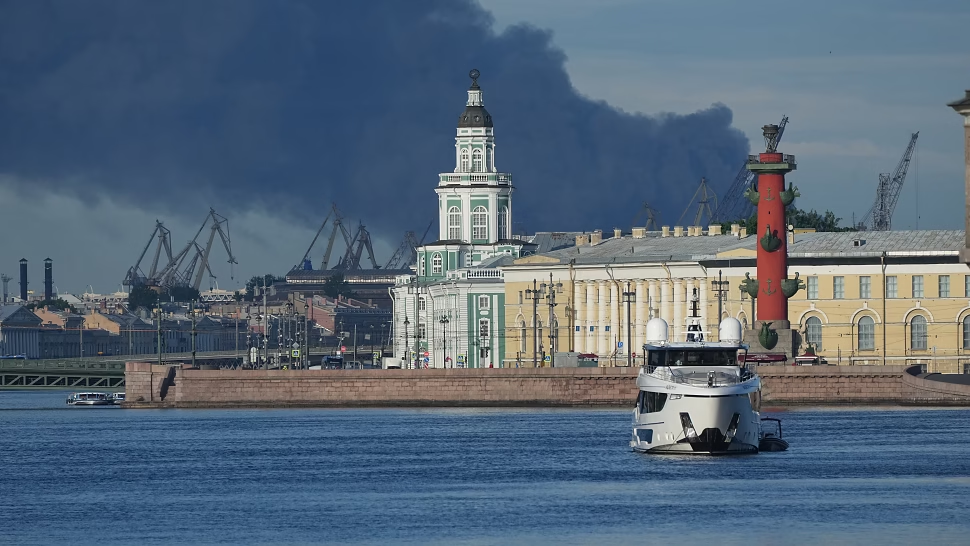
Drones ucranianos alcanzaron una terminal petrolera en San Petersburgo, provocando un incendio en las instalaciones. El presidente Volodymyr Zelenskyy confirmó la operación: los aparatos recorrieron más de 1.000 kilómetros para impactar en la segunda ciudad más grande de Rusia. Una columna de humo se elevó sobre la ciudad natal de Vladimir Putin, justo durante un foro económico clave para atraer inversión extranjera.

Suspensión temporal

El aeropuerto de San Petersburgo suspendió operaciones durante la noche. También se reportaron interrupciones en el servicio de internet móvil. Las autoridades rusas reconocieron el ataque, aunque sin detallar daños específicos. Señalaron que la infraestructura urbana fue el objetivo, sin mencionar la terminal petrolera.

RelatedNATO intercepts Russian drones in Polish airspace

El Kremlin calificó los ataques con drones como “sistemáticos” en las últimas semanas. La defensa aérea rusa enfrenta creciente presión ante la frecuencia de estos incidentes. La comunidad internacional observa con atención estos desarrollos, que podrían escalar las tensiones entre Ucrania y Rusia.

Continue reading

Portugal y Austria ganan escaño en el Consejo de Seguridad de la ONU

Portugal y Austria desplazan a Alemania en la votación de la Asamblea General.

Nuevos miembros no permanentes

Portugal y Austria lograron este miércoles un lugar en el Consejo de Seguridad de la ONU tras vencer a Alemania en una votación secreta de la Asamblea General. La contienda estuvo marcada por una intensa campaña diplomática.

En la elección, que define cinco nuevos miembros no permanentes, Portugal obtuvo 134 votos y Austria 131. Alemania, una de las principales potencias económicas de Europa y con seis mandatos previos en el Consejo, recibió 104 apoyos y quedó fuera de los escaños rotatorios.

RelatedPortugal y Austria vencen a Alemania en elección del Consejo de Seguridad

En otra disputa, Kirguistán derrotó a Filipinas por 143 votos contra 49 después de cuatro rondas de votación, asegurando por primera vez su ingreso al Consejo. En tanto, Zimbabue y Trinidad y Tobago fueron elegidos sin oposición por sus respectivas regiones, con más de 180 votos cada uno.

Los cinco países electos asumirán sus funciones el 1 de enero, reemplazando a Dinamarca, Grecia, Pakistán, Panamá y Somalia. Su mandato será de dos años dentro del órgano de 15 miembros encargado de velar por la paz y la seguridad internacionales.

El Consejo de Seguridad, integrado además por Estados Unidos, Rusia, China, Reino Unido y Francia como miembros permanentes con derecho a veto, ha sido objeto de críticas por su incapacidad para resolver conflictos recientes. Esto ha reavivado los llamados a una reforma que actualice su estructura a la realidad geopolítica actual.

Continue reading