


The impact of drug trafficking on European security
The main European official in the fight against illicit drugs has issued a strong warning at the end of his mandate: trafficking of cocaine and other stimulants is generating unprecedented levels of violence in traditionally safe regions. Alexis Goosdeel, director of the European Union Drugs Agency since 2016, has documented how this phenomenon spreads from northern ports, such as Antwerp, to the heart of cities such as Brussels, where shootings are recorded near key institutions.
According to Goosdeel, the globalization of organized crime has allowed groups from the Balkans to operate in South America, while gangs use social networks to recruit vulnerable young people, including undocumented migrants. “We are facing a worrying change in behavior: adolescents who adopt ultra-violent behavior without a prior criminal history,” he explained in an interview with The Associated Press.
Alarming data and risks to public health
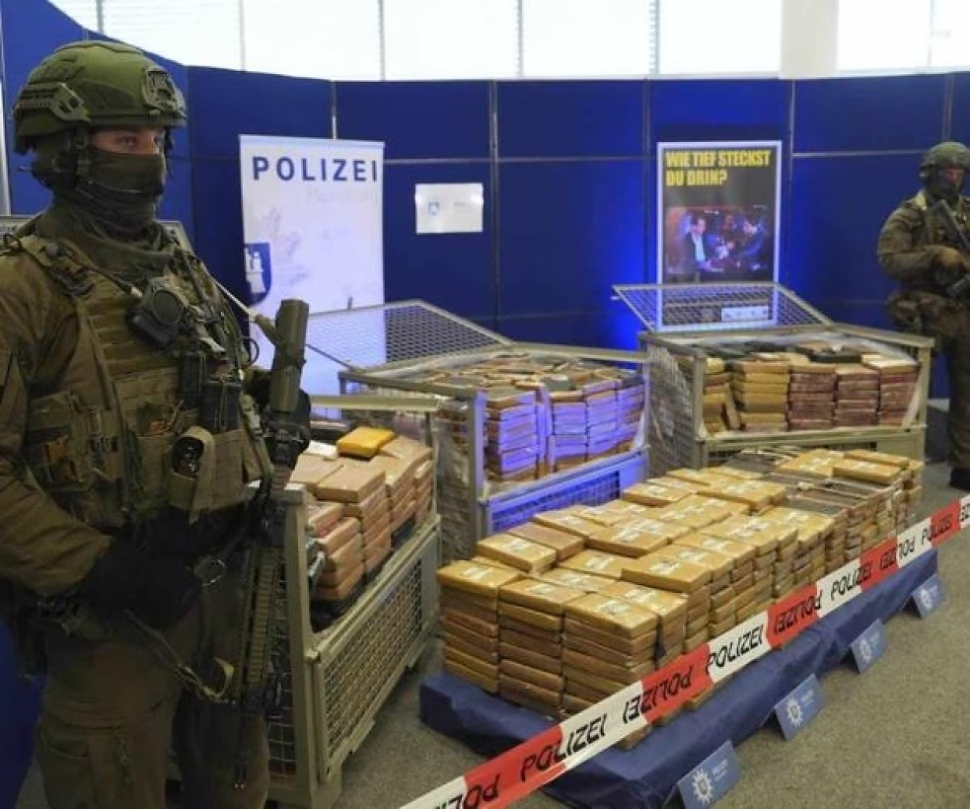
The agency’s annual report reveals that cocaine seizures in Europe reached an all-time high in 2023, with 419 tons seized. Belgium, Spain and the Netherlands account for 72% of the total, highlighting the key role of their seaports. An emblematic case was the discovery of 13 tons hidden in a shipment of Ecuadorian bananas, evidence of the sophistication of the cartels.
But the problem goes beyond security. Goosdeel warned of an imminent public health crisis: “The consumption of stimulants is growing, but we do not have effective pharmacological treatments. In five years, we will need urgent solutions.” Unlike opioids, there are no medications to control addiction to these substances, which requires greater investment in research.
A call to coordinated action
The Belgian expert criticized repressive approaches, such as the American “war on drugs”, and defended the European model, focused on harm reduction and social reintegration. “Criminalizing consumers is not the solution. We must combine security with health policies,” he said. In addition, he highlighted the challenge of new synthetic drugs: more than 1,000 substances identified in 27 years, many of them emerging in the last decade.
Goosdeel’s warning is clear: ignoring this problem will worsen violence and collapse health systems. “Drugs are everywhere, even in what we produce locally. We need comprehensive strategies,” he concluded.
Are you concerned about this issue? Share this information on your social networks and help us make visible a challenge that affects all of Europe. Explore more analysis on public health and safety in our specialized section.


