A Call for Sanity and Negotiation in the Agri-Food Sector
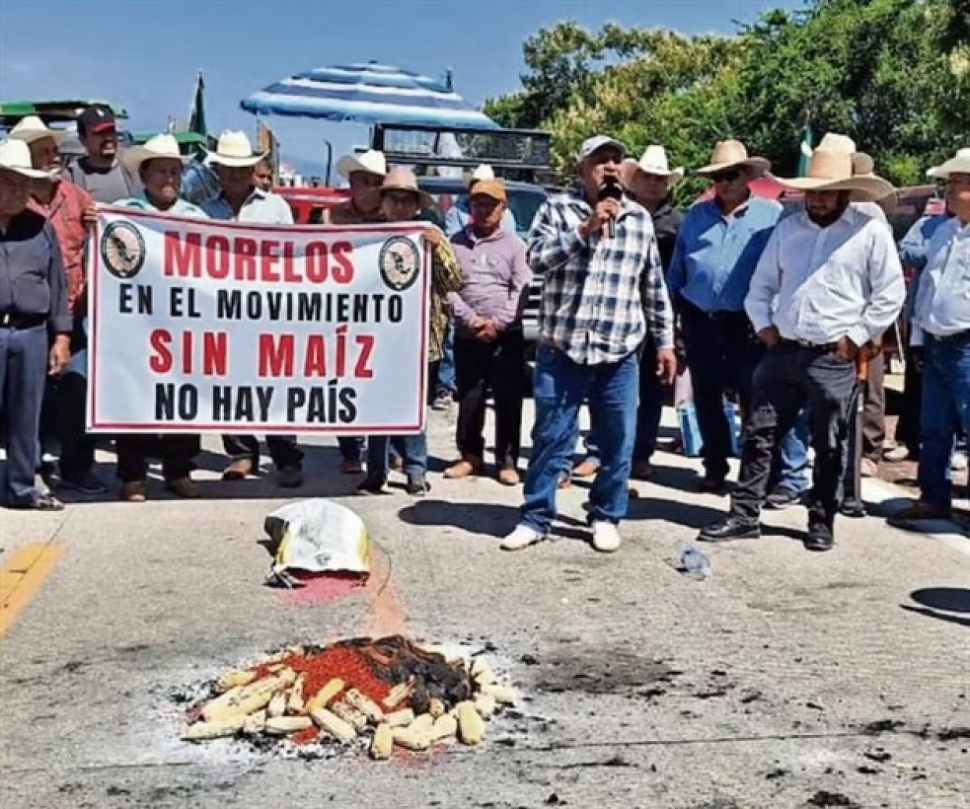
Organizations representing the Mexican business sector have made a strong call to grain producers to suspend blocking measures on communication routes and favor constructive dialogue with federal and state authorities. This position is based on the collective awareness that the marketing problem, characterized by the demand for a higher price for grains, cannot be resolved by unilateral decree, but rather through serious and representative negotiation.
The National Agricultural Council (CNA) and the Confederation of Industrial Chambers (Concamin) have expressed an explicit understanding of the complex situation that the countryside is going through. Both organizations recognize the international context of low prices for agricultural commodities, added to the sustained increase in production costs, factors that converge in a significant reduction in profitability for agricultural producers. This shared diagnosis lays the foundations for a joint search for solutions.
Analysis of Actions and Their Immediate Consequences
After more than a week of mobilizations and road closures, the CNA, through an official statement, recognized the preliminary progress made by government officials with producers from entities such as Michoacán, Jalisco and Guanajuato. However, the organization formally urged the federal government to continue the working groups, ensuring that they are inclusive and have the participation of the legitimate leadership of the rural sector.
In a cause and effect analysis, the ANC warned about the collateral effects generated by the blockades. These actions, although they seek to make a legitimate demand visible, directly impact the population in general, workers in other sectors and, paradoxically, the same producers whom they are intended to defend, by interrupting supply chains and the normal development of economic activities. For this reason, agricultural producers in Guanajuato were urged to allow free transit and explore other pressure mechanisms to reach the necessary agreements.
The Industrial Posture and Market Rules
In a parallel line of argument, Concamin issued a position calling for sanity and the search for agreements. The industrial confederation, which actively participates in the dialogue tables, was forceful in pointing out that the problem of grain marketing will not be resolved by affecting the rights of third parties or by closing companies. He stressed that the attack on economic activities compromises the production of food that the Mexican population requires, generating a domino effect throughout the value chain.
The solution, from Concamin’s perspective, lies in providing certainty to the producer about prices before the harvest period. The institution was emphatic in remembering that grain prices are fundamentally governed by the international dynamics of supply and demand, and not by administrative provisions. Faced with the specific request of the producers to guarantee a price of seven thousand 200 pesos per ton of corn, compared to the government offer of six thousand 150 pesos, Concamin argued that moving away from market rules undermines national credibility and competitiveness, creating distortions in the internal market that, ultimately, impact prices for the final consumer. The logical conclusion is that marketing support must be the result of a consensus reached through dialogue.
This analysis reveals a multifaceted conflict where social pressure collides with global economic realities, and where the solution inevitably involves a transparent and realistic negotiation that balances the needs of the countryside with national economic stability.
Do you consider that dialogue is the most effective way to resolve sectoral conflicts?Share this analysis on your social networks to expand the conversation and explore more content about the national economy on our portal.