Activation of the Emergency Protocol
The Secretariat of National Defense (SEDENA) has proceeded to the official implementation of Plan DN-III-E, the emergency protocol of the Mexican Army for responding to natural disasters. The current phase focuses on the activation of temporary shelters, a critical measure that has provided accommodation and shelter to more than 250 people in the areas of the state of Sinaloa most impacted by tropical storm Lorena. The municipalities of Ahome, Guasave and the community of Juan José Ríos constitute the epicenter of these relief efforts.
The operational execution of the plan is in charge of the Ninth Military Zone, coordinating the efforts of military personnel and members of the National Guard. Actions on the ground are multifaceted, ranging from essential humanitarian logistics, such as the distribution of food, mats and blankets in shelters, to engineering work for the reestablishment of basic services, highlighting the clearing of drains and sewers clogged by sediments carried by the floods.
Impact and Damage Reported in the Region
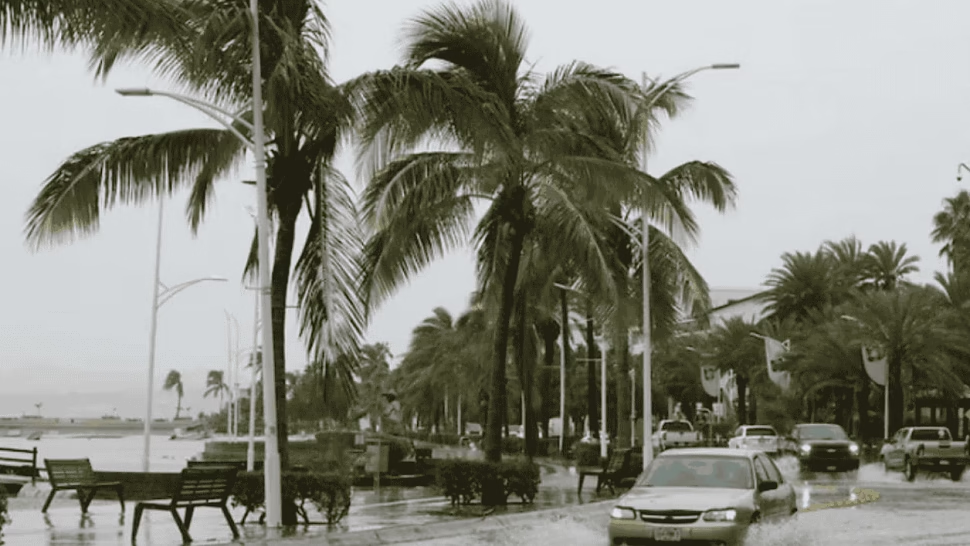
The meteorological phenomenon discharged its greatest intensity during the early hours of Friday, with torrential rainfall that forced the suspension of school activities in the municipalities of Ahome, Choix, El Fuerte, Guasave and Juan José Ríos. The immediate and most visible consequence was the generation of extensive floods that flooded roads, businesses and homes, collapsing the storm drainage infrastructure in multiple points.
In the municipality of Guasave, the situation has been aggravated by reports from citizens of the Valle Campestre Fraccionamiento, who are severely affected by the retreat of black water that has gushed inside their homes, representing a considerable health risk. Additionally, the force of the flow in the San Joaquín drain caused soil erosion, generating a considerable sinkhole that felled a large tree. The relief brigades have had to establish a security perimeter with delimitation tapes to prevent accidents in the area.
The magnitude of the event required the creation of multiple collection centers. One of the main ones was established in the Ruiz Cortines syndicate, which provided temporary accommodation to 160 people who were evacuated preventively and forcibly after the invasion of water in their homes. For its part, in the municipality of Ahome, where the rains persisted with less intensity for much of Friday, the municipal authorities activated sewer cleaning protocols and achieved the evacuation of more than 76 people from various communities, with the town of Higueras de Zaragoza being one of the most affected.
This inter-institutional deployment highlights the complexity of emergency management in the face of hydrometeorological phenomena, which require a rapid, coordinated and technically specialized response to mitigate damage to the population and begin the recovery and rehabilitation processes of the damaged areas.
Do you know anyone in the affected area? Share this crucial information on your social networks to keep your community informed and help us amplify the reach of available relief protocols. We invite you to explore more content related to preparation and response to natural disasters on our portal.