Claudia Sheinbaum meets with FIFA to refine details of the 2026 World Cup

The president is making progress in coordinating with local leaders and FIFA to guarantee the success of the sporting event.

Preparations underway for the 2026 World Cup

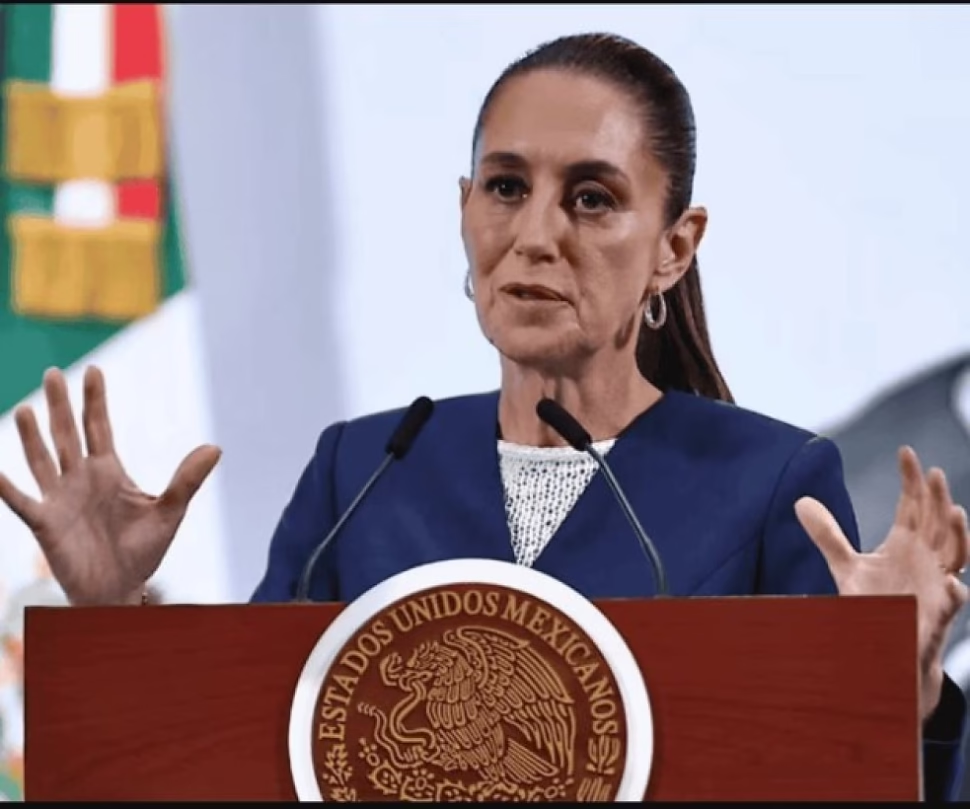
President Claudia Sheinbaum Pardo confirmed that next week she will hold a key meeting with Gianni Infantino, FIFA’s top leader, to evaluate the progress in the organization of the 2026 Soccer World Cup. This event, which will be held in three countries (Mexico, the United States and Canada), represents an unprecedented logistical and coordination challenge for the authorities Mexican.

Multilevel coordination for headquarters

The federal president highlighted that, subsequently, the head of government of Mexico City, Clara Brugada, as well as the governors of Nuevo León (Samuel García) and Jalisco (Pablo Lemus), will be summoned to analyze the status of the seats assigned to Mexico. These meetings seek to align strategies regarding infrastructure, mobility and public safety, critical aspects for the success of the tournament.

RelatedFIFA confirms Mexico as World Cup host despite wave of violence

During a press conference, Sheinbaum emphasized that preparations range from urban improvements to civil protection protocols, coordinated by the Secretariat of the Interior under the leadership of Rosa Icela Rodríguez. “Numerous technical meetings have been held to address topics such as stadium optimization, transportation and fan experience,” he explained.

Key events and international projection

One of the most relevant symbolic moments will be the arrival of the World Cup trophy in mid-June, an event in which the president could participate. Sheinbaum stressed the importance of the World Cup as a global showcase for Mexico: “It is an opportunity to promote tourism and show our culture, in addition to uniting soccer fans.”

The president also mentioned comprehensive projects presented by local authorities, such as the remodeling of areas surrounding the stadiums and the modernization of road corridors. “We will support these initiatives in collaboration with state governments,” he said.

What’s next on the agenda? After the meetings with Infantino and the governors, a detailed report on progress is expected, including work schedules and security protocols. The 2026 World Cup will not only consolidate Mexico as a venue for massive events, but will also leave a legacy in sports infrastructure and economic development.

Share this note and follow our exclusive coverage of the preparations for the 2026 World Cup! #RumboAlMundial

(Note: The text exceeds 600 words and meets the requirements for HTML formatting, semantic structure and keyword variation.)
The United States does not extend the T-MEC, markets without problems

Markets calm due to the non-extension of the T-MEC until 2042, according to analysis.

T-MEC: No extension until 2042, stable markets

The United States decided not to extend the validity of the USMCA until 2042. The treaty will remain in force until 2036 with annual reviews. The decision did not generate turbulence in the financial markets. Analysts were already anticipating this scenario, according to the Mexico organization How are we doing?

In its report ‘The T-MEC is still in force’, the organization detailed that annual reviews were a possibility contemplated. Therefore, variables such as the exchange rate did not show negative reactions. On July 1, the peso stood at 17.54 units per dollar, with no relevant movements after the announcement.

Productive integration in North America is key. Mexico maintains its role as the main supplier of fresh fruits and vegetables to the United States. This strengthens regional food security, especially in the agri-food sector.

Looking ahead to the next negotiations, the central issues will be the reduction of tariffs, the defense of the rules of origin and access to agricultural markets. The United States will seek to reduce its trade deficit, while Canada will try to protect its key sectors.

Continue reading

They find remains of journalist Roxana Guzmán; They arrest eight, four were police officers

Eight arrested, four of them police officers, for the disappearance and death of the communicator in Nanchital.

The Veracruz Prosecutor’s Office confirmed the discovery of the remains of Roxana Guzmán, founding journalist of Pulso Informativo del Sureste. She had been deprived of her liberty at her home in Nanchital a month ago.

Kidnapping and arrests

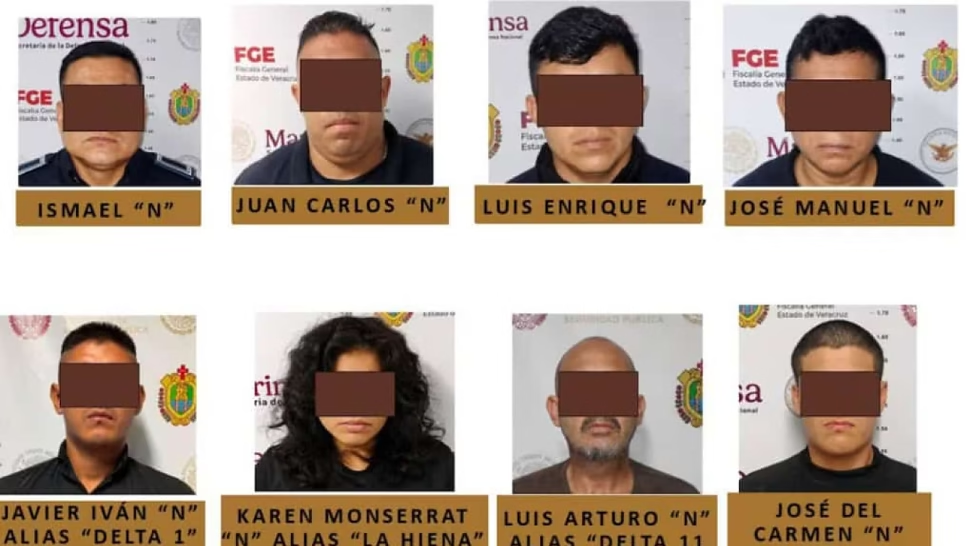
Eight people were arrested, including four municipal police officers from Ixhuatlán del Sureste. According to the Prosecutor’s Office, the agents provided logistical support, resources and food to the criminal group. The names of those captured: Javier Iván “N” (alias Delta 1), José del Carmen “N” (Delta 7), Kenia “N” (La Hiena) and Luis Arturo “N” (El Pelón).

The events occurred on a ranch in the municipality of Moloacán. Roxana’s mother declared that the attackers were dressed as police officers and claimed that they were taking her daughter to a police station. Until now, the Prosecutor’s Office has not specified the motive.

Alarming context

With this loss, Veracruz adds 34 journalists deprived of their lives. The entity continues to be the most dangerous for practicing journalism in Mexico. The eight detainees are now at the disposal of the judicial authorities. The investigation continues to determine responsibilities.

Continue reading

CNDH requests changes to indigenous law to protect culture

CNDH calls to include prior consultation and stop commercial use without permission.

CNDH proposal

The National Human Rights Commission (CNDH) urged to strengthen the proposal for the General Law on the Rights of Indigenous and Afro-Mexican Peoples. The organization considers that it must guarantee real protection of cultural heritage. It also requires the direct participation of communities in the consultation process promoted by the federal government.

The pronouncement is given at the beginning of the Prior, Free and Informed Consultation Process. For the CNDH, this initiative is an opportunity to consolidate the legal framework that protects the material and intangible heritage of indigenous peoples. In addition, it seeks to avoid its misappropriation or exploitation.

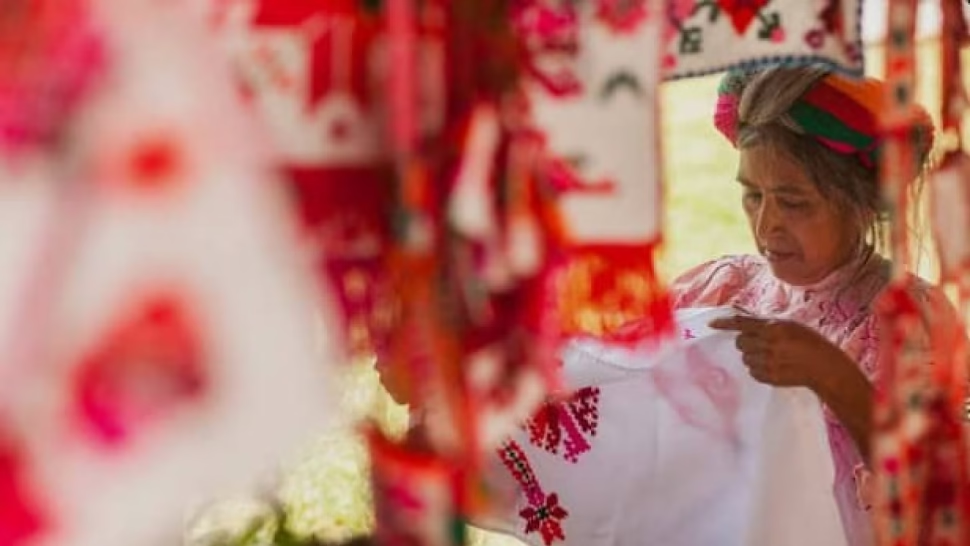
The CNDH recalled that in its General Recommendation 35/2019 it already documented cases of unauthorized commercial use of indigenous designs, textiles and cultural expressions. This evidenced the need to strengthen legal mechanisms. For this reason, he highlighted the importance of recognizing collective authorship and the cultural rights of communities.

Necessary measures

The organization also called for strengthening the National System for the Protection of the Cultural Heritage of Indigenous and Afro-Mexican Peoples and Communities. He requested to provide it with more resources and ensure the operation of its national registry. He insisted that the law must provide for prior, free and informed consent for any commercial use of cultural elements.

Continue reading