The Olympic landscape changes
The image is powerful. Eileen Gu and her classmates wait for their scores next to a huge Powerade cooler. They leave without taking anything, but the brand has already accomplished its mission.
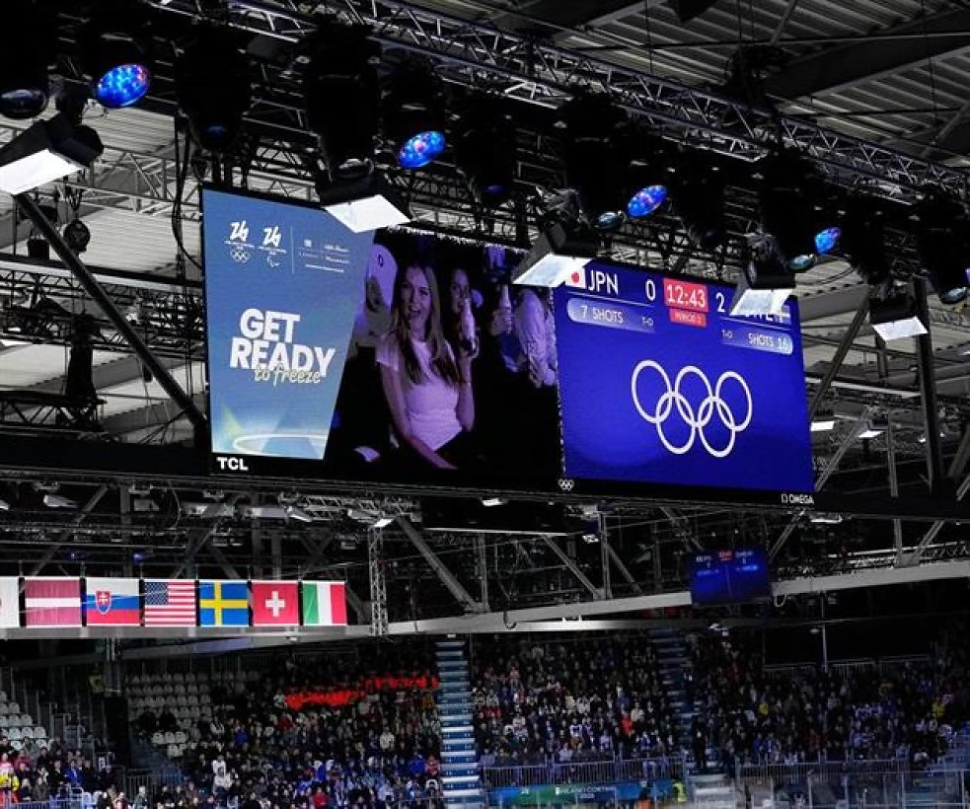
The blue bottles are stacked on the hockey benches. Even the tissues in the emotional ‘Kiss and Cry’ area of the skate have a logo. The absence of advertising on slopes and slopes, a historical hallmark, is fading.
“We continue to open up those opportunities for partners,” said Anne-Sophie Voumard, IOC marketing director. Products can now “be present organically.”
A trend that accelerates
The turning point was clear: the opening ceremony of Paris 2024 with Louis Vuitton in the foreground. Since then, the pressure from sponsors to obtain more visibility has not stopped.
“There seems to have been a growing need on the part of sponsors for the IOC to show greater value,” explains Olympic marketing expert Terrence Burns.
The IOC seeks to create extra value in its TOP program, key to its finances for 40 years. Revenue fell to 560 million this year, compared to 871 million last year. You have to innovate.
Inside the venue, the experience is different. An announcer encourages with “This is the Corona Zero wave!” The ‘Stellantis Freeze Cam’ brings the action together. An interview is “thanks to Salomon.”
Burns sees it as a moral gesture for brands, but questions its actual impact: “I get it, but show me how that helps you sell more stuff.”
The rules are relaxed
The Olympic Charter says that any logo must be approved “on an exceptional basis.” But restrictions are eased year after year.
“The Olympic world moves slowly, and so it should. It’s a 3,000-year mark,” reflects Burns.
A decade ago it was so strict that they checked hand dryers in bathrooms to cover marks with tape. Today, the medals are presented in Louis Vuitton boxes and there are ‘official selfies’ presented by Samsung.
Voumard recognizes the challenge: “keeping heritage and uniqueness in mind” while breaking new ground.
And the future is already here. Los Angeles 2028 will mark another milestone: for the first time naming rights for venues will be sold in a pilot plan. The Honda Center and a temporary Comcast arena will be the first.
The Olympic spirit now navigates between the pure ideal and economic necessity. Brands are no longer just on the edge of the field; They are inside the game.