A holiday with a double identity: heavenly faith and earthly bureaucracy
Ah, December 12. Mexico dresses up, colors, faith and… logistical confusion. Millions of faithful mobilize to honor the Morenita del Tepeyac, in a demonstration of devotion that, let’s be honest, tests the capacity of any public transportation system. As crowds gather at the Basilica of Guadalupe or their local parishes, the common citizen, in a sublime act of spiritual and practical multitasking, desperately asks: Will I be able to deposit my check today? Because nothing says “Guadalupe miracle” like needing cash on a holiday.
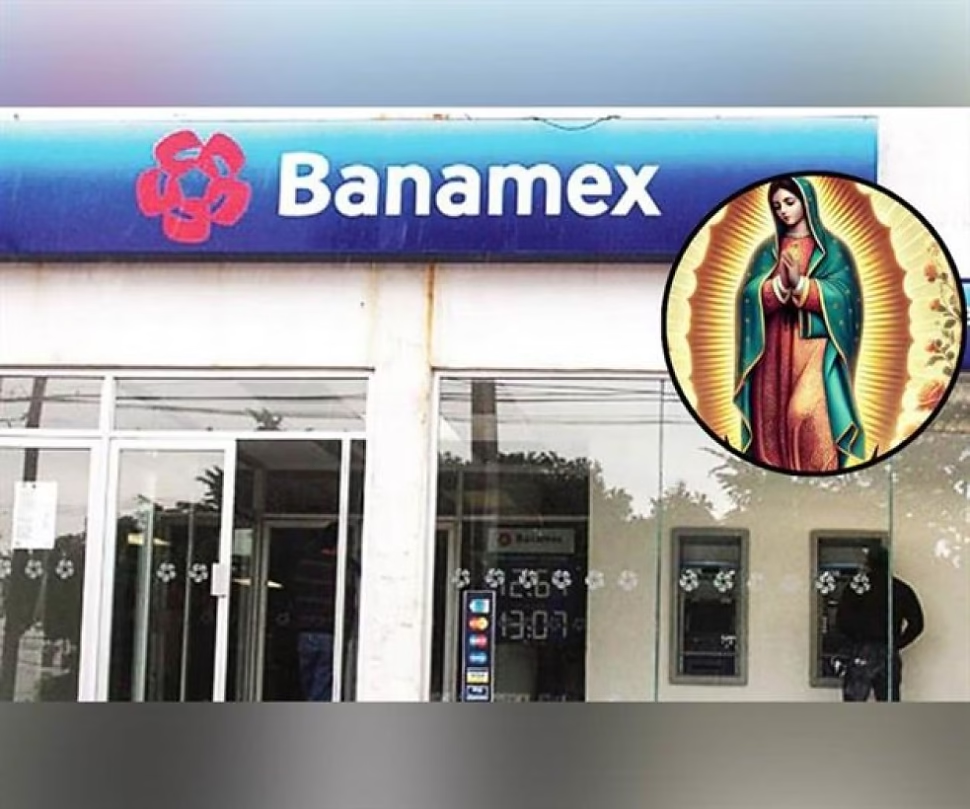
And this is where things get deliciously ironic. It turns out that next Friday the 12th, banking institutions will decide to give their employees a break. But surprise! It’s not to wink at the Virgin (although I’m sure it wouldn’t bother her). The official closure is due to a much more earthly and probably very necessary celebration: Bank Employee Day, a date blessed and recognized by the sacred National Banking and Securities Commission (CNBV). Imagine, a holiday within another holiday. It’s like those Russian dolls, but bureaucratic.
Technology to the rescue (or how the bank tells you to “make do”)
But don’t panic, devotees and customers. The financial system, in its infinite wisdom, has foreseen that your faith in liquidity must not waver. So, while physical branches close their doors so that their workers can… go to the Basilica perhaps?, a legion of more than 60 thousand ATMs will remain standing, along with the ubiquitous digital banking services and telephone support. Basically, they tell you: “We’re sorry, there are no humans today, but here you have a machine and an app.” Basic operations will remain available, because capitalism, unlike some miracles, never sleeps.
The origin of the mess: an apparition, an ayate and a misunderstood message
Let’s go back to the origin of all this annual fuss: the year 1531. According to tradition, the Virgin Mary appeared not once, but four times to the indigenous Juan Diego Cuauhtlatoatzin. One would think that once was enough to capture the message, but of course, in the 16th century there was no WhatsApp to confirm the reading. On a cold December day, the Virgin entrusts him with a divine mission but with administrative procedures: ask Bishop Juan de Zumárraga to build a temple on the Tepeyac hill. Naturally, the bishop, displaying a skepticism that today we would apply to any offer of pre-approved credit, asked for proof.
The heavenly solution? A seemingly absurd assignment: pick fresh flowers on the arid peak and in the middle of winter. Juan Diego, displaying a faith that would have given him a record in *Amazing Race*, obeys and finds a miraculous garden. He keeps them in his humble tilma and, when he displays it before the bishop, the *plot twist* occurs: in addition to the roses, the image of the Virgin of Guadalupe appears stamped on it. The definitive test. A divine autograph, if you will, on a maguey fiber canvas. Now that is an original and irreplicable NFT. This event not only convinced the bishop, but also began the construction of a sanctuary that would become the epicenter of Mexican faith and identity. And, without planning it, the indirect cause of thousands of queries about banking hours centuries later.
So now you know: this December 12 merges the divine and the mundane. You can say a prayer and then check your balance from your cell phone. The Virgin interceded for a temple; bank employees, for a day off. Everyone happy.
Were you surprised by the real reason for the bank closure? Share this juicy dose of festive irony on your social networks and help others solve the mystery. Explore more content about the curiosities behind the holidays on our site!