


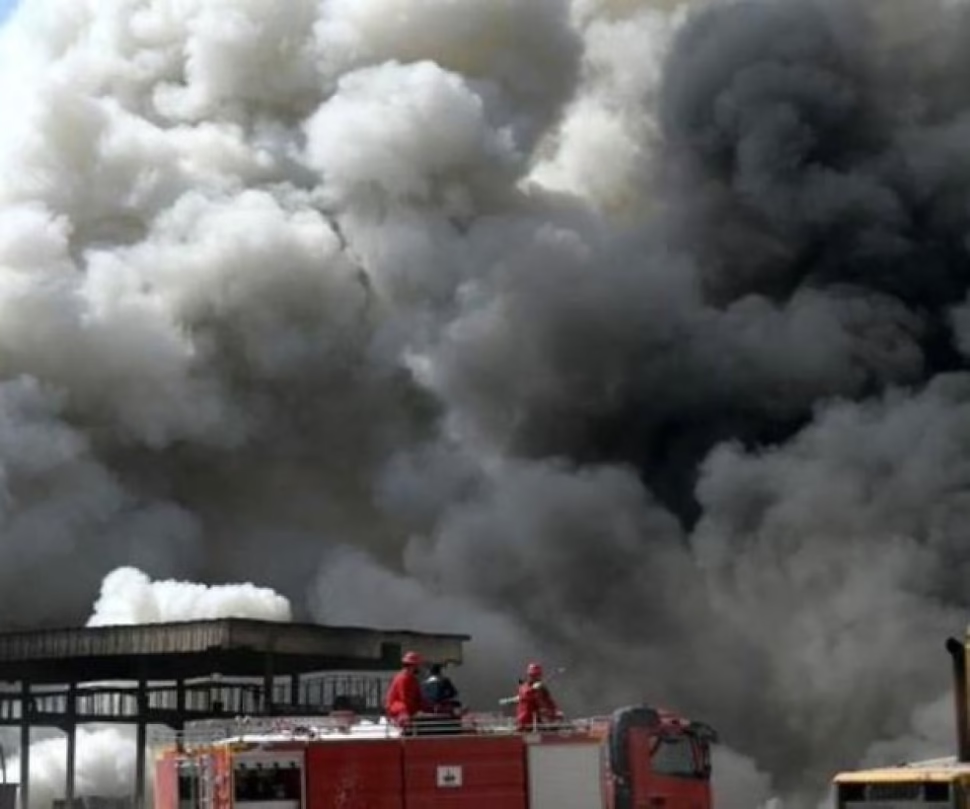
Incident at oil facilities reveals security vulnerabilities
An explosion recorded in the early hours of Tuesday in the Sarsang oil field, located in the autonomous region of Iraqi Kurdistan, forced the immediate cessation of operations. The American company HKN Energy, operator of the field, confirmed through a statement on Facebook that the incident occurred at approximately 7:00 a.m. (local time) at one of its production facilities. Fortunately, no human casualties were reported.
Local authorities quickly identified the use of unmanned drones as a method of the attack, although no group has claimed responsibility so far. “Emergency teams are working to control the fire while we investigate the exact causes,” the company detailed, adding that they will keep activities suspended until a comprehensive risk assessment is completed.
Geopolitical context and escalation of tensions
This event occurs less than 24 hours after another similar attack against the Jormala camp in Erbil, where two drones were intercepted by Kurdish security forces with support from the international coalition. The Kurdistan Ministry of Natural Resources described both incidents as “terrorist acts against vital economic infrastructure,” pointing to a pattern of coordinated attacks.
Regional analysts link this wave of attacks to recent tensions between Israel and Iran, particularly after the June 24 ceasefire. The Kurdish authorities directly accuse the Popular Mobilization Forces (PMF), militias allied to Tehran, although they have denied participation and attribute the events to residual cells of the Islamic State.
Operational and environmental impact: HKN Energy emphasized its commitment to industrial safety protocols and mitigation of ecological damage. However, experts warn that the prolonged interruption could affect regional production, which contributes approximately 450,000 barrels per day to the global market.
This episode highlights the growing threat posed by unmanned aerial vehicles against critical infrastructure, a trend documented in at least 12 similar incidents in the area during 2025. The lack of specialized anti-aircraft systems in civilian installations remains a weak point in the energy security strategy.
Are you interested in understanding how this situation affects international markets? Share this analysis on your social networks and follow our channel for updates on energy geopolitics. #OilSecurity #Kurdistan
Note: This report is based on official statements and verified sources. We will update with new data as the investigation progresses.


