Anti-immigrant policies slow the US economy, according to Barclays

A report reveals how immigration restrictions could slow economic growth and leave critical gaps in the labor market.

The “American dream” is left without manpower (and without jokes)

It seems that the United States is hell-bent on sabotaging its own economy with the elegance of an elephant in a china shop. According to a analysis by Barclays – yes, those Brits who know more about our labor market than we do – anti-immigration policies are about to turn the “land of opportunity” into the “land of unemployment queues.”

When xenophobia is more expensive than an iPhone Pro Max

It turns out that, after surviving a pandemic, inflation and Trump memes, the American economy is facing its worst enemy: itself. Barclays notes that without immigrants, the workforce could lose up to 40,000 jobs per month by 2025. Basically, it’s like eliminating the entire population of Aspen, Colorado, every month. The reason? Pure mathematics: baby boomers are retiring, millennials are not having enough children (thanks, economic crisis!) and natives are not filling the jobs.

RelatedUS immigration policies slow job creation and drive inflation

But here’s the best part: non-farm jobs, those that keep the country going, could fall from 150,000 to 40,000 a month. In other words, we went from hiring as if it were Black Friday to doing it as if it were a record store in 2023. And the worst thing is that it’s not even due to lack of demand, but because there simply won’t be enough (legal) hands to work.

The irony? While some politicians remain obsessed with building walls, the economy needs workers more than ever. Without them, growth will slow down more than a bureaucratic process. Barclays sums it up with British elegance: This could put an end to “American exceptionalism”. Or, in Christian, that the US will no longer be the economic superpower that we all knew.

Moral of the day: If you want to kill your economy, start by closing the doors to those who support it. Next step? Probably blame the immigrants for that too.

Are you surprised by this analysis? Share this note and join the debate about the future of work. And if you want more content like this, explore our other publications on economics and job trends. #NoFiltersNiWalls
Typhoon Bavi threatens Guam and Mariana Islands; could be super typhoon

The threat comes after the devastating passage of Sinlaku; authorities call to prepare.

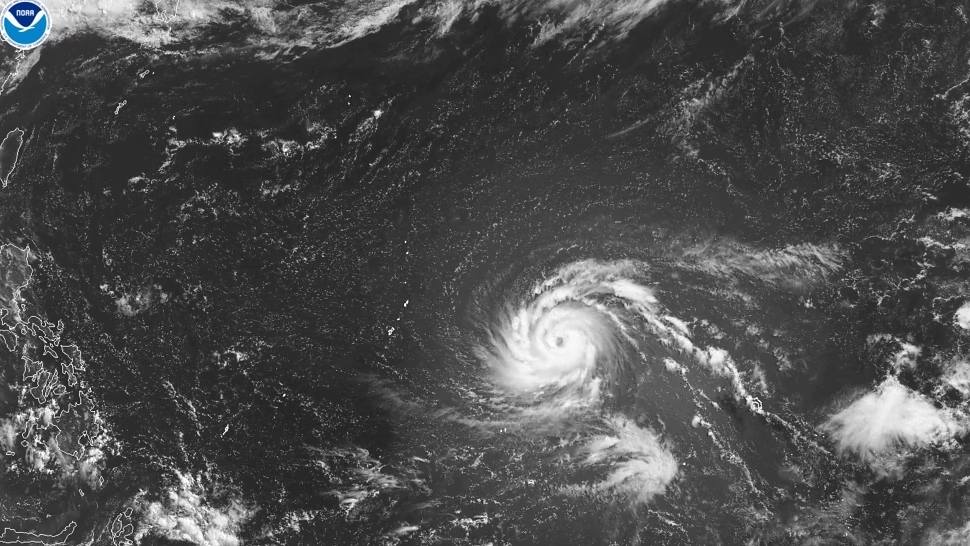
Typhoon Bavi advances strongly towards Guam and Mariana Islands

The authorities of Guam and the Commonwealth of the Northern Mariana Islands are on alert for the possible arrival of Typhoon Bavi. The system could become a super typhoon at the beginning of next week, according to reports from the National Weather Service.

This phenomenon occurs just months after the devastating passage of super typhoon Sinlaku, which left serious damage in the region and left thousands homeless.

Preparations and background

On Friday, Bavi was located about 1,223 kilometers east of Guam, with sustained winds of 129 kilometers per hour. Forecasts indicate that it could intensify rapidly, exceeding 241 kilometers per hour before approaching the Mariana Islands.

Faced with the risk, residents began to reinforce their homes with boards, stock up on fuel, and store food and water. On Saipan, many families have not yet fully recovered from Sinlaku: some remain without power and others remain in temporary shelters after losing their homes.

Meteorologists warn that Bavi could modify its trajectory, but recommend maintaining all prevention measures. Guam, where important US military bases are located, also remains under surveillance.

Specialists point out that the current cyclone season in the Pacific could be more active due to the influence of the El Niño phenomenon and the increase in global temperatures. While monitoring continues, authorities urge the population to stay informed and prepared for any changes in the trajectory or intensity of the typhoon.

Continue reading

Ukrainian attacks worsen energy crisis in Russia

Ukraine hits Russian refineries; Putin rejects truce and continues offensive.

The war between Russia and Ukraine intensifies with a new wave of cross attacks. Moscow faces a growing fuel shortage after the Ukrainian bombings against its refineries, while in Ukraine dozens of people are reported affected by the Russian bombings.

Impact on Russian energy

Since March, Ukraine has attacked more than 50 oil and energy facilities on Russian territory and on the Crimean peninsula. These attacks have affected about a third of the country’s refining capacity, according to analyst estimates.

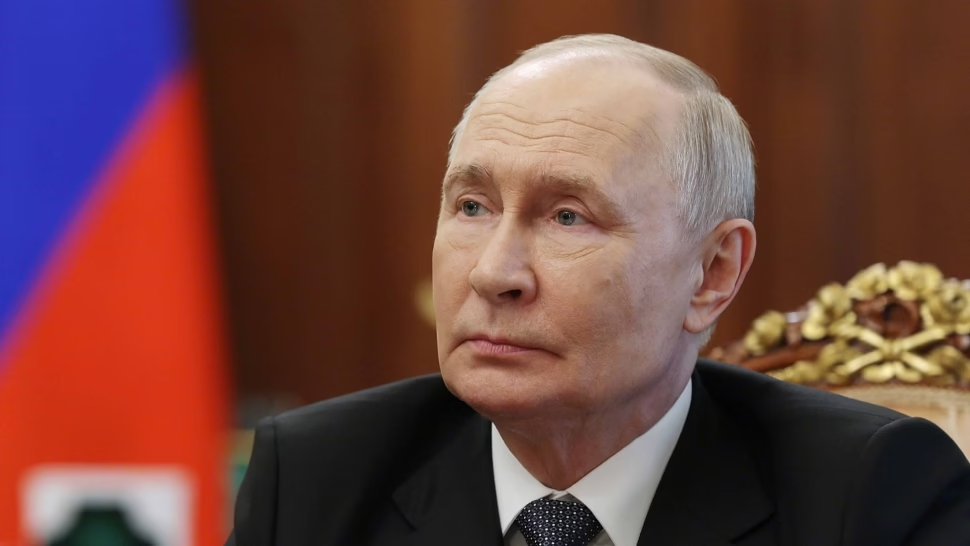
Russian President Vladimir Putin maintains his position of continuing the military offensive and rejects any ceasefire proposal. The lack of fuel is beginning to be felt in several regions, while Ukrainian forces redouble their blows to enemy energy infrastructure.

The conflict shows no signs of de-escalation. Both sides are preparing for more clashes in the coming days, with energy supplies a key strategic objective.

Continue reading

Díaz-Canel rejects that economic measures are capitalist

The Cuban president defends the 176 measures as strengthening socialism.

The president of Cuba, Miguel Díaz-Canel, denied that the package of 176 economic measures approved by the Communist Party and the National Assembly represents a retreat towards capitalism. In an interview with Puerto Rican journalists broadcast by official media, he assured that the actions are sovereign and seek to strengthen the socialist model in the face of the complex crisis facing the island.

Measures in context

Díaz-Canel acknowledged that the initiatives have received criticism from both right-wing sectors and left-wing groups. However, he emphasized that this is an adaptation to current circumstances, not an abandonment of the country’s historical principles. The president insisted that a capitalist restoration is not promoted, but rather that he seeks to sustain the socialist system in an adverse environment.

The statements have generated a wide debate inside and outside Cuba. International analysts are closely observing whether these measures imply profound changes in the economic structure of the Caribbean nation. For now, the government maintains its official line: necessary adjustments, without ideological concessions.

Continue reading