A test with the smell of gas (and a global spectacle)
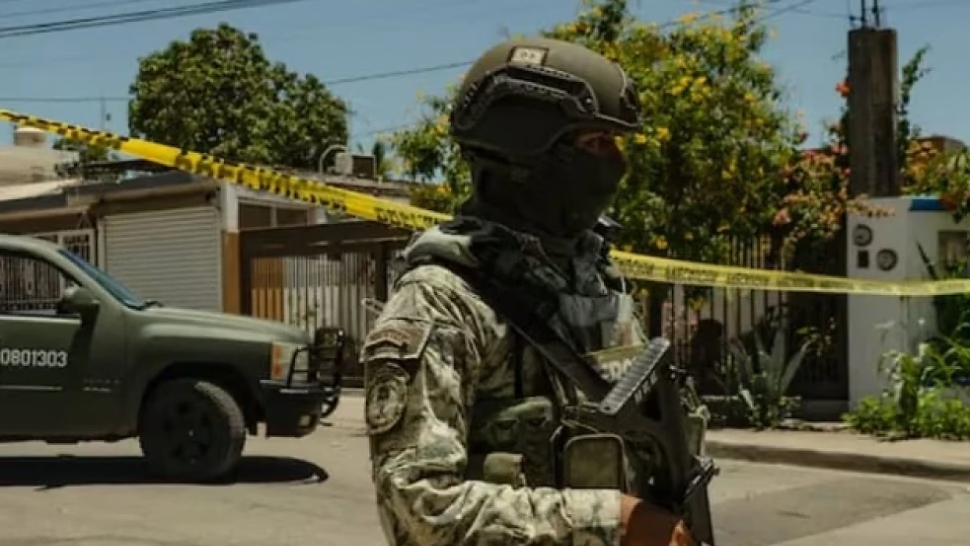
The Secretary of the Navy (Semar) is already warming up for the 2026 World Cup. Their last training session was not on the field, but on the docks of Veracruz. The scenario: a simulated chemical, biological, radiological and nuclear (CBRN) incident.
The script sounded like a thriller. A container declared empty was discovered that, surprise, was not. When opened, it released a cloud of toxic smoke that ‘affected’ nearby personnel. The simulated gas was high concentration ammonia.
“…a cloud of smoke was generated that affected nearby personnel, activating emergency protocols,” the agency explained.
The alarm went to Level III, that of ‘imminent threat’. The entire apparatus came into action: the Unified Center for Maritime Protection (CUMAR), the port captain’s office, Customs and the port companies. A coordinated deployment for a fictitious crisis.
Specialized CBRN Course personnel put on the suits. Their mission: extract ‘victims’ from the contaminated area, decontaminate them and take them for medical evaluation. Then, they isolated the ‘hot zone’, neutralized the imaginary threat and lowered the alert to Level I. Safe harbor again.
The message between the lines is clear. This goes beyond just a routine exercise. It is a dress rehearsal for when the world sets its eyes on Mexico during the mega soccer event.
“…as part of the preparations for the 2026 World Cup, inter-institutional coordination is strengthened…”, said Semar.
They reinforce the narrative of a country prepared for any eventuality, no matter how improbable. A show of logistical strength and polished protocols against possible chemical ghosts. Security as another stage that must be ready on time.