Analysis of energy efficiency in charging mobile devices
The airplane mode functionality, originally designed to comply with aviation safety regulations by disabling radio transmissions, has proven to have a secondary application of significant value in the field of energy management of smartphones. Careful research into recommended practices by leading manufacturers reveals that this tool is an effective method for optimizing the charging process and prolonging battery life.
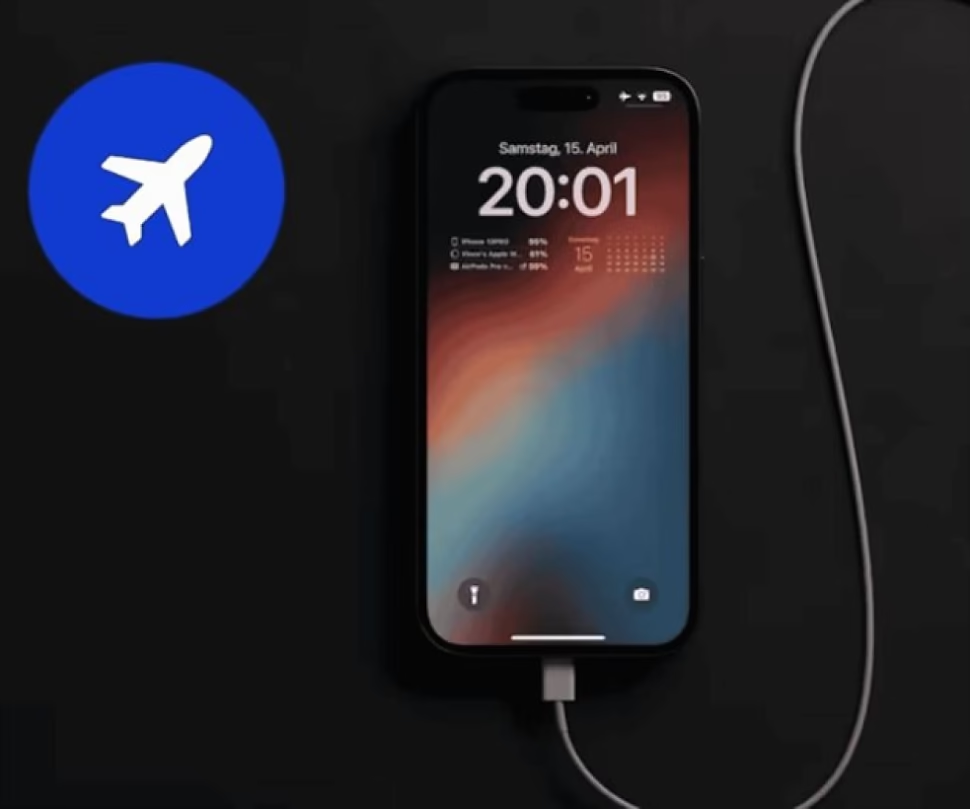
Activating airplane mode immediately interrupts all wireless connections on the device, including cellular networks, Wi-Fi, and Bluetooth. This action transforms the smartphone into an isolated data exchange unit, which leads to a drastic reduction in background energy consumption. The central processor and communication chips, which normally allocate a considerable portion of resources to searching for and maintaining signals, as well as managing real-time notifications, cease these activities. Consequently, the electrical energy supplied by the charger is allocated almost exclusively to the charging circuit of the lithium ion battery, eliminating the so-called “energy parasites” that compete for the electrical supply.
Empirical evidence and manufacturers’ recommendations
An examination of technical support documents published by leading companies in the sector corroborates this premise. Apple, in its performance optimization guides for iPhone, explicitly suggests the use of airplane mode as a strategy to improve the efficiency of the charging cycle. Similarly, Samsung identifies this function as an energy-saving mechanism within its ecosystem of devices. Google‘s position in the Android ecosystem aligns with this perspective, promoting practices that minimize unnecessary consumption during critical processes such as recharging.
The main benefit of this methodology is two-faceted. First of all, a tangible reduction in loading time is observed. By eliminating background processes that drain energy, the available power is channeled entirely into the battery, accelerating its replenishment. Secondly, and of greater relevance in the long term, the phenomenon of overheating is mitigated. Lithium batteries are particularly sensitive to high temperatures, and recurring thermal stress accelerates their internal chemical degradation, reducing their maximum charge capacity over time. By keeping the device in a more stable thermal state during recharging, the structural integrity of the battery is preserved, extending its operational life cycle.
Practical considerations and trade-offs
However, the implementation of this strategy entails a functional compensation that the user must evaluate. The state of temporary incommunication is the direct consequence. By activating airplane mode, the device becomes invisible to networks, making it impossible to receive phone calls, SMS text messages, notifications from instant messaging applications and any other form of communication in real time. This situation poses a scenario of limited availability that may not be viable in contexts where constant connectivity is required, such as in emergency situations or during the expectation of urgent communication.
Therefore, the decision to employ this technique must be based on a contextual cost-benefit analysis. Its application is recommended during predictable periods of disconnection, such as night sleep hours (after setting an alarm, since this function is not affected), during a highly concentrated work day where interruptions are counterproductive, or at any time in which the user can allow themselves a state of controlled digital isolation. The key lies in planning and understanding that you are trading immediate connectivity for a gain in energy efficiency and long-term device health.
In conclusion, the use of airplane mode while charging the cell phone stands as a practice based on electrical engineering principles and recommended by manufacturers. Its systematic implementation can translate into a significant optimization of the recharge time and a protection factor for the battery, mitigating heat wear. However, its adoption must be aware of the functional disconnection it implies, reserving it for those moments in which the benefit in preservation of the device outweighs the need to be permanently located.
Did you know this alternative use of airplane mode? Share this analysis with other users to help optimize the performance of their devices and explore more content on how to maximize the life of your technology.