The spectacle of misgovernment, now at its closest airport
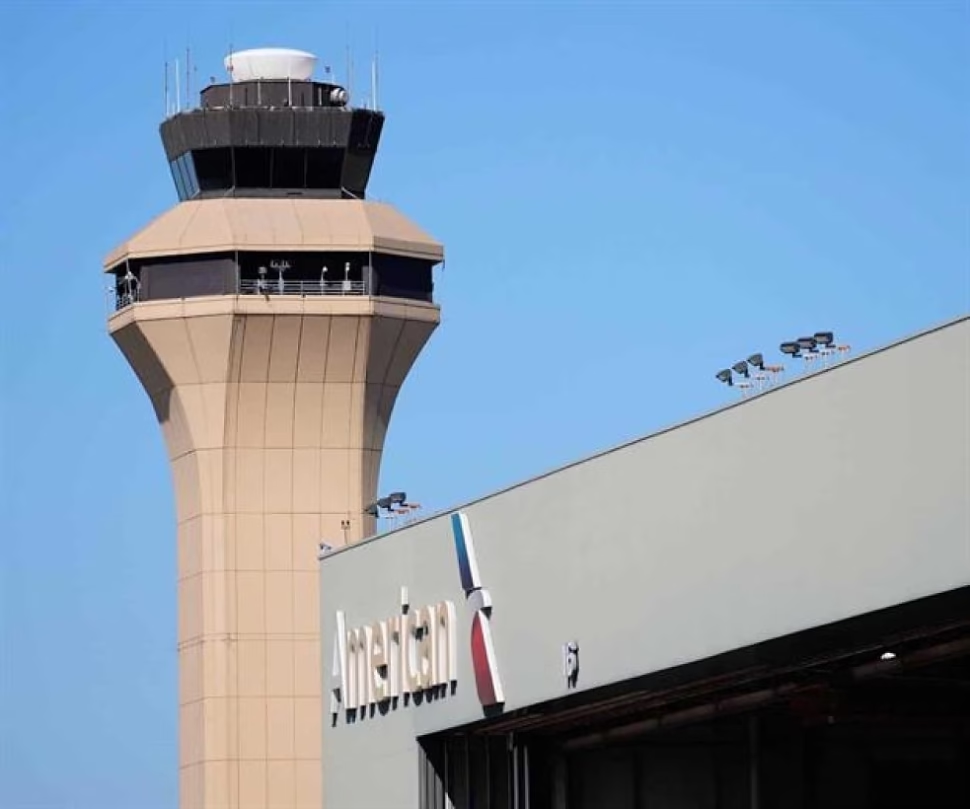
It seems that Washington has decided that the most exciting way to travel is with a touch of Soviet suspense: will your plane take off? Today? Have you ever?Flight delays, that annoying consequence of having a system that works, continued their victorious streak at US airports this Sunday. The official reason: a “shortage” of air traffic controllers. The real reason: the government shutdown, that brilliant month-old political strategy that basically consists of the adults in charge deciding to stop doing their jobs, but expect everyone else to continue doing theirs… for free, of course.
Newark Airport in New Jersey took the gold palm for ineptitude, with delays of two to three glorious hours. Did you need an excuse to reread that novel you always put off? Newark is your place. The New York City Emergency Management office, in a rare outburst of sincerity, warned on social network His advice to travelers was a monument to understatement: “You should expect schedule changes, holdups at gates, and missed connections.” Come on, your business trip can easily turn into a Kafkaesque odyssey with the smell of airport food.
One country, many airports, and the same disaster
But let’s not think that Newark suffers alone. Oh no. Chaos is democratic and is distributed throughout the geography. George Bush Intercontinental Airport in Houston, Dallas Fort Worth International Airport and the famous O’Hare in Chicago also joined the party, experiencing dozens of delays and the occasional cancellation, to add to the excitement. They were followed in this parade of incompetence by the main air terminals of San Francisco, Los Angeles, Denver and Miami, according to FlightAware data. It is comforting to see so much national unity, even if it is around a collapse.
And in the midst of this bleak panorama, emerges the figure of Secretary of Transportation, Sean Duffy, who has been warning with the calm of a prophet of the apocalypse that travelers will see more interruptions in flights the longer controllers go without receiving a salary. A revolutionary idea, without a doubt: people work better when they get paid. Who would have imagined it.
Duffy, speaking Sunday on CBS’ “Face the Nation,” dropped pearls of bureaucratic wisdom: “We’re working overtime to make sure the system is safe. And we’ll reduce traffic, you’ll see delays, we’ll cancel flights to make sure the system is safe.” Impeccable logic: so that nothing falls, we dismantle it first. Most hilarious was his statement that he doesn’t plan to fire controllers who don’t show up for work. “They are people who are making decisions to feed their families, I am not going to fire them,” said the secretary. “They need support, they need money, they need a paycheck. They don’t need to be fired.” What a human detail, especially if we remember that at the beginning of October, Duffy himself had warned them that calling in sick could cost them their jobs. Coherence, it seems, is also on strike.
The detail that turns this farce into a Greek tragedy is that almost 13,000 air traffic controllers have been working without pay for weeks, according to the Federal Aviation Administration (FAA) itself. Even a small number of absences wreak havoc because the agency was already facing a critical shortage of about 3,000 controllers before this circus began. It is as if a soccer team already played with two fewer players and now, in addition, they are asked to pay for the privilege of running on the field.
The disruptions in commercial aviation are the perfect demonstration that misgovernment has very tangible consequences. While politicians become entangled in their ideological battles, thousands of people see their plans, their money and their patience disappear in a waiting room. A reminder that the next time you vote, you might want to think about who is most likely to ensure your plane takes off on time.
Did you like this journey through the absurdity of public management?Share it on your social networks and help more travelers be prepared for chaos, or explore more content on the crises that define our time.